
Hyperpigmentation Season: How to Prevent & Treat Sun Spots
Every summer, the same story plays out in treatment rooms across the country. A client comes in holding up their phone, pointing to a dark patch on their cheek or a cluster of spots along their jawline: “These weren’t here last fall. What happened?”
What happened is hyperpigmentation season. And for estheticians, it represents one of the most important and most bookable client conversations of the year.
Here’s a complete breakdown of why sun spots and uneven pigmentation spike in summer, which ingredients actually fade them, and which treatments deliver the most visible results.
What Is Hyperpigmentation, Really?
Hyperpigmentation is a catch-all term for any area of the skin that is darker than the surrounding tissue, caused by an excess of melanin the pigment produced by melanocyte cells. It is not a single condition. Your clients may present with:
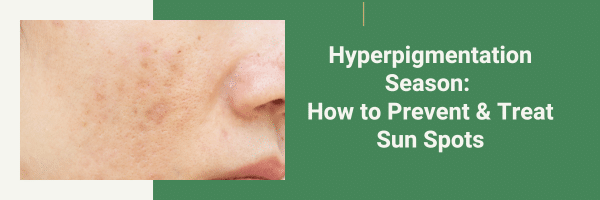
- Solar lentigines (sun spots / age spots) flat, brown patches caused by cumulative UV exposure, most common on the face, hands, shoulders, and chest
- Post-inflammatory hyperpigmentation (PIH) dark marks left behind after acne, breakouts, or skin trauma
- Melasma larger patches of pigmentation triggered by hormonal shifts, sun exposure, and heat; extremely common in women and often worsened every summer
All three types are triggered or worsened by summer conditions. Understanding which type a client has changes how you treat it.
Why Summer Is Peak Hyperpigmentation Season
1. UV Exposure Directly Activates Melanin Production
This is the most fundamental cause. When UV rays penetrate the skin, they trigger melanocytes to produce melanin as a protective response. In healthy, even-toned skin, this manifests as a tan. In skin that already has underlying pigmentation or in skin that has experienced past sun damage it amplifies existing discoloration and creates new spots.
The critical detail: even brief, daily incidental sun exposure adds up. Driving to work, walking from the parking lot, sitting near a window this cumulative UV exposure is responsible for the slow accumulation of damage that shows up each summer as new or darkened spots. Clients rarely connect the dots because there’s no single day they can point to as the cause.
2. Heat Worsens Melasma Independently of UV
This one surprises many clients and some estheticians. Melasma is not caused only by UV light. Infrared heat (the warmth component of sunlight) independently activates melanocytes and triggers pigment production. This means that even clients who are diligent about sunscreen but spend time in the heat cooking near a stove, exercising outdoors, sitting in a hot car may still experience melasma worsening in summer.
3. Post-Inflammatory Pigmentation Deepens with UV
As covered in our summer breakouts post, acne increases in summer due to heat and excess oil production. Every new breakout is a potential PIH mark. When those fresh post-acne marks are then exposed to summer UV without adequate protection, the melanin response is amplified dramatically. What might have faded in 4 weeks without sun exposure can linger for months when UV hits it consistently.
4. Barrier Disruption from Summer Activities
Swimming in chlorinated pools, exposure to salt water, sunscreen reapplication throughout the day, and increased sweating all create micro-stress on the skin barrier. A compromised barrier is less able to regulate melanin distribution evenly, and is more vulnerable to UV penetration allowing damage to reach deeper layers of the skin where more permanent pigment changes can occur.
5. Clients Skip Their Brightening Routine in Summer
A common but underappreciated cause: many clients use vitamin C serums, brightening moisturizers, and exfoliating treatments in fall and winter as part of a corrective routine then abandon them in summer because they feel too active or because they switch to a “lighter” routine. This is exactly backward. Summer is when brightening and antioxidant protection are most needed, not least.
The Ingredients That Actually WorkKojic Acid The Targeted Melanin Blocker
Kojic acid is derived from fungi and works by inhibiting tyrosinase — the enzyme responsible for producing melanin. Unlike harsh bleaching agents, kojic acid interrupts pigment production without destroying melanocytes, making it suitable for long-term use. It’s also effective across all Fitzpatrick skin types, which makes it a professional-grade choice in the treatment room.
Product: The Bright Radiance Moisturizer is Aesthetic Back Bar’s star brightening formula, built around kojic acid and niacinamide with support from green tea extract, olive leaf extract, and chamomile. It evens skin tone without bleaching, improves overall radiance, reduces redness and spots, and protects against premature aging. For clients dealing with sun spots or uneven tone, this is the finishing step that maintains and deepens treatment results at home.
It’s also included in the Clinical Back Bar Skincare Set — the full-size professional kit built around clinical actives including kojic acid, vitamin C, retinol, niacinamide, hyaluronic acid, and peptides.
Vitamin C – The Antioxidant That Prevents and Brightens
Vitamin C works on hyperpigmentation through two mechanisms simultaneously. First, it is a powerful antioxidant that neutralizes the free radicals generated by UV exposure the same free radicals that trigger melanocyte activity and speed up pigment formation. Second, it inhibits tyrosinase activity (the same enzyme targeted by kojic acid), directly reducing the skin’s ability to form new pigment.
The combination of prevention and correction makes vitamin C the single most important brightening ingredient for summer use. Clients who apply it daily in the morning create an antioxidant shield that reduces UV-triggered melanin production from the first exposure onward.
Products: The Nourishing Vitamin C Serum provides daily antioxidant protection and gradual brightening in a clean, gentle formula. For clients who need more concentrated correction, the Total C Complex Serum delivers 10% Vitamin C alongside peptides for brightening plus collagen support ideal for mature skin with both pigmentation and texture concerns.
Niacinamide (Vitamin B3) – The Pigment Transfer Blocker
Niacinamide addresses hyperpigmentation through a unique mechanism: it blocks the transfer of melanin from melanocytes to keratinocytes (skin cells). Melanin is produced in melanocytes and then transferred to surrounding skin cells this transfer is what makes pigmentation visible at the surface. Niacinamide interrupts this transfer process, reducing the appearance of existing spots while preventing new pigmentation from becoming visible. It also reduces inflammation, strengthens the barrier, and regulates oil making it one of the most versatile summer actives available.
Product: The Natural Replenishing Serum (Vitamin B3) delivers niacinamide in a stable, skin-compatible formula. Pair it with the Bright Radiance Moisturizer for a comprehensive home-care brightening protocol that covers both melanin transfer and melanin production.
Glycolic Acid (AHA) Surface-Level Accelerator
Alpha hydroxy acids like glycolic acid increase cell turnover, bringing fresh, unpigmented cells to the surface faster while helping existing dark spots fade more quickly. Glycolic acid also enhances penetration of brightening actives — a vitamin C serum applied after a glycolic toner or mask penetrates more effectively and delivers better results. In summer, glycolic exfoliation is best used in the evening or in professional treatments (not as a daily morning step), always followed by SPF.
Products: The Radiant Rose Gel Mask with 10% Glycolic is the most targeted AHA treatment in the ABB line brightening, exfoliating, and smoothing in a single in-treatment application. The Retexturizing Enzyme Mask with 5% Glycolic (Pumpkin Enzyme) combines enzymatic exfoliation with glycolic acid for a gentler, dual-action approach. The AHA Smooth & Glow Mask is another excellent option for evening pigmentation and improving overall skin texture as part of a brightening facial.
For daily home care, the Daily Balance Moisturizer (AHA Cream) with 5% AHA provides consistent, low-level exfoliation that prevents dead cell buildup and helps brightening serums absorb more effectively.
Rosehip Seed Oil- The Barrier-Repair Brightener
Rosehip oil is rich in trans-retinoic acid (a form of vitamin A), essential fatty acids (linoleic and alpha-linolenic acid), and vitamin C making it one of the most naturally comprehensive brightening ingredients available. It supports barrier repair, fades post-inflammatory marks, and gradually corrects uneven skin tone through regular use. For PIH clients who also have a compromised barrier from summer activities, rosehip is an ideal pairing with more active brightening ingredients.
Product: The Vitamin Restore Serum contains rosehip seed oil alongside vitamin C ester, vitamin E, tamanu oil, and neem seed oil a potent antioxidant and barrier-repair serum that addresses both the inflammatory and oxidative components of summer hyperpigmentation.
Antioxidant Complex (Rooibos, Vitamin E, Green Tea)
No brightening protocol is complete without broad antioxidant defense. UV generates reactive oxygen species (ROS) free radicals that damage DNA, trigger inflammation, and activate melanin pathways. Antioxidants neutralize these free radicals before they can initiate the pigmentation cascade. Rooibos, found in the Vitamin Daily Moisturizer, is particularly potent: it mimics superoxide dismutase (SOD), one of the body’s most powerful endogenous antioxidant enzymes.
Product: The Vitamin Daily Moisturizer — enriched with rooibos, avocado oil, jojoba oil, and vitamins A, B, C, and E is an ideal daily protective finish for clients focused on pigmentation prevention throughout summer.
Berry Antioxidants
Berry-derived antioxidants (from blueberry, raspberry, and other polyphenol-rich sources) scavenge UV-generated free radicals and have demonstrated anti-inflammatory activity that reduces the UV-triggered melanin response at the cellular level.
Product: The Berry Boost Facial Mask packs these antioxidants into a treatment-room mask that brightens, soothes, and protects in a single step — an excellent finishing mask after enzyme exfoliation in a brightening protocol.
What Treatments Work BestBrightening Enzyme Facial
The safest, most effective in-treatment approach for summer hyperpigmentation. The protocol:
- Double cleanse with the Facial Gel Cleanser
- Exfoliate with the Retexturizing Enzyme Mask / Pumpkin Enzyme (5% Glycolic) – enzymes dissolve dead, pigmented surface cells while glycolic boosts penetration of brightening actives
- Treat with the Nourishing Vitamin C Serum or Total C Complex Serum – maximum antioxidant load after barrier is freshly exfoliated
- Mask with the Berry Boost Facial Mask – antioxidant-rich, soothing
- Finish with the Bright Radiance Moisturizer (kojic acid + niacinamide) – locks in correction and keeps brightening actives working post-treatment
Best for: all hyperpigmentation types, all skin types except actively reactive rosacea.
AHA Resurfacing Facial (Evening Appointments)
For clients with more established sun spots or uneven tone who can tolerate a stronger acid treatment:
- Cleanse with the Facial Gel Cleanser or Daily Refine Cleanser
- Exfoliate with the Radiant Rose Gel Mask (10% Glycolic) – applied as a peel mask for targeted resurfacing
- Treat with the Total C Complex Serum for antioxidant and collagen support
- Finish with the HA Forte Intense Hydrating Mask for barrier recovery and hydration post-acid
- Seal with Bright Radiance Moisturizer
Important: Always schedule AHA treatments for evening or recommend clients avoid sun exposure for 24 hours post-treatment. Send home with strict SPF instructions.
Antioxidant Glow Facial
For maintenance clients and those with early pigmentation who want prevention and brightening without aggressive exfoliation:
- Cleanse with the Green Tea Cream Cleanser
- Tone with the Cucumber Toner
- Treat with the Nourishing Vitamin C Serum + Natural Replenishing Serum (B3)
- Mask with the AHA Smooth & Glow Mask or Berry Boost Mask depending on skin type
- Finish with Vitamin Daily Moisturizer or Bright Radiance Moisturizer
Best for: prevention-focused clients, sensitive skin with mild pigmentation, post-summer maintenance.
Corrective Monthly Series
For clients with established melasma or significant solar lentigines, a single treatment won’t deliver dramatic results. The most effective approach is a monthly series of brightening enzyme or AHA facials from June through September, combined with a consistent home-care brightening protocol. Progress is visible and cumulative – typically 3–4 treatments to see significant improvement, with maintenance treatments monthly thereafter.
What to Tell Clients Who Think SPF Is Enough
SPF addresses UV – but as covered above, heat (infrared), visible light, and pollution also trigger melanin production. Your clients need antioxidants on top of sunscreen, not instead of it. Think of it this way: sunscreen is a barrier. Antioxidants are the backup defense that handles what gets through.
The combination of SPF + vitamin C in the morning is significantly more protective than either used alone — and for melasma clients, nothing else will move the needle without it.
The Bottom Line
Summer pigmentation is predictable, treatable, and preventable – but it requires estheticians to get proactive, not reactive. The clients who come in with darkened sun spots in August are the clients who needed a brightening conversation in May.
Use early summer booking to position brightening facials as a seasonal series. Pair every appointment with a targeted home-care retail protocol built around vitamin C, kojic acid, niacinamide, and AHA. And make SPF part of every single checkout conversation.
Explore Aesthetic Back Bar’s full professional brightening line at aestheticbackbar.com – no minimums, made in the USA, clean formulas with clinical results.
Aesthetic Back Bar supplies wholesale professional skincare to licensed estheticians, spas, and med spas nationwide.