

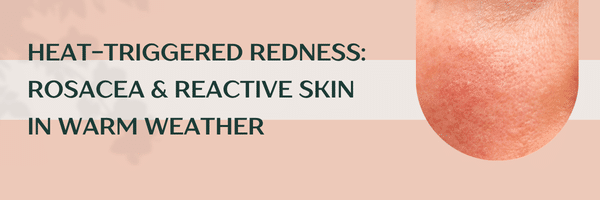
Heat-Triggered Redness: Rosacea & Reactive Skin in Warm Weather
For clients with rosacea or reactive skin, summer is not a season they look forward to. While everyone else is enjoying warm weather, these clients are dealing with flushing, persistent redness, heightened sensitivity, and flare-ups that seem to come out of nowhere. If you’re seeing more of these clients in your treatment room from June through August, this is your guide, the why behind what’s happening, the ingredients that actually calm it down, and the treatments that make a real difference.
Understanding the Difference: Rosacea vs. Reactive Skin
Before diving into solutions, it’s worth distinguishing between these two conditions — because they’re often confused, and treating them the same way can backfire.
Rosacea is a chronic inflammatory skin condition characterized by persistent facial redness, visible blood vessels (telangiectasias), and in some cases, papules and pustules. It tends to cycle between flare-ups and relative calm, and summer is one of the most common seasons for flares due to heat, UV exposure, and increased outdoor activity.
Reactive skin is a broader category, skin that responds with redness, stinging, or flushing to external triggers like weather, products, stress, or temperature change. It may not have a formal diagnosis, but the discomfort is just as real. Many clients don’t realize their skin is reactive until summer amplifies what was a minor sensitivity the rest of the year.
Both conditions share the same core problem in summer: the skin’s defense systems are overwhelmed, the barrier is compromised, and inflammation is running the show.
Why Summer Makes It So Much Worse
1. Heat Dilates Blood Vessels
Heat is the most direct and immediate rosacea trigger. When the body temperature rises, from sun exposure, hot environments, exercise, or even a hot shower, blood vessels near the skin’s surface dilate to release heat. In clients with rosacea or reactive skin, those blood vessels are already hypersensitive and prone to over-responding. The result is visible flushing, prolonged redness, and in chronic cases, permanently enlarged capillaries over time.
Even stepping from an air-conditioned room into summer heat can trigger an immediate flush for these clients. The rapid temperature shift is a vascular shock the skin simply cannot buffer effectively.
2. UV Exposure Is the #1 Rosacea Aggravator
Sun exposure is consistently ranked as the leading trigger for rosacea flare-ups, above stress, alcohol, spicy food, and all other common triggers combined. UV radiation causes oxidative damage to skin cells, stimulates inflammatory pathways, and weakens the protective skin barrier. For reactive skin, this UV-induced inflammation shows up as diffuse redness and heightened sensitivity that can last days after a single afternoon of sun exposure.
The challenge is that many clients with rosacea avoid thick, heavy sunscreens because they fear clogging or further irritation, and then they skip sun protection entirely. This is one of the most important education opportunities you have as an esthetician.
3. Sweating Irritates an Already Compromised Barrier
Sweat contains lactic acid, ammonia, and salt. On healthy skin, this is manageable. On reactive or rosacea-prone skin, where the barrier function is already impaired, sweat sitting on the surface throughout a hot day creates a low-grade chemical irritation that keeps the inflammatory cycle going. Clients often notice that their skin feels “raw” or stinging after exercising or spending time outdoors in summer, this is why.
4. Humidity Disrupts Skin Microbiome Balance
The warm, humid conditions of summer alter the skin’s microbiome, the community of bacteria and microorganisms that help regulate immune response and barrier function. A disrupted microbiome can increase the presence of Demodex mites and certain bacteria that are linked to rosacea flares. Humid conditions can also cause existing products to perform differently on the skin, making previously tolerated formulas suddenly feel heavy, sticky, or reactive.
5. Clients Self-Treat, Often Making Things Worse
Summer redness often triggers well-meaning but counterproductive behavior: clients over-cleanse, apply cooling astringents with alcohol, or try harsh brightening products to counteract redness. All of these actions strip the barrier further, increase TEWL (transepidermal water loss), and intensify the inflammatory cycle. Educating clients about what not to do in summer is as important as recommending what to use.
The Right Ingredients for Rosacea & Reactive Skin in Summer
The ingredient philosophy for these clients is clear: calm, hydrate, protect, and simplify. Nothing aggressive, nothing stripping, nothing that adds heat or friction to the skin.
Green Tea (EGCG Epigallocatechin Gallate)
One of the most well-researched anti-inflammatory botanicals in skincare. Green tea’s primary active compound, EGCG, is a powerful antioxidant that neutralizes free radical damage from UV exposure, reduces redness-triggering inflammatory cytokines, and supports microcirculation. For rosacea-prone clients, green tea is an ideal ingredient because it addresses both the oxidative and inflammatory sides of the condition without causing sensitization.
Product: The Green Tea Cream Cleanser is built around green tea extract alongside aloe vera, chamomile flower water, and rose water, a calming, non-foaming formula that cleans without stripping. Ideal as the first or second cleanse for sensitive and rosacea clients in summer. The sulfate-free, non-foaming texture means zero risk of surfactant-induced irritation.
Aloe Vera
A summer essential for reactive skin. Aloe contains acemannan and a range of anti-inflammatory compounds that cool surface redness, reduce the sensation of heat in flushed skin, and support barrier repair. Aloe is also highly hydrating without being occlusive, making it ideal for clients whose skin feels both sensitive and oily in the summer heat.
Cucumber
Cucumber hydrosol delivers immediate cooling and soothing at the skin’s surface. It contains caffeic acid and ascorbic acid, which reduce water retention and calm irritated skin, and its high water content makes it one of the most refreshing toning ingredients available for reactive skin in summer.
Product: The Cucumber Toner is formulated with pure cucumber water, aloe vera leaf juice, and witch hazel all fragrance-aggravating-free, with a clean fresh scent that enhances the facial experience rather than triggering sensitivity. It’s the ideal toning step for rosacea clients: pH-balancing, instantly calming, and completely non-irritating.
Chamomile
Roman chamomile contains bisabolol and chamazulene, two compounds with clinically recognized anti-inflammatory and skin-soothing activity. Chamomile specifically targets the redness response in reactive skin and is gentle enough for even the most compromised barrier. It also has mild antioxidant properties, making it a natural defense against UV-triggered inflammation.
Rose Water
Rose water (Rosa damascena hydrosol) is anti-inflammatory, mildly astringent without being drying, and rich in polyphenols that support barrier integrity. For rosacea clients, it offers a gentle toning action that tightens surface pores and calms redness without the harshness of alcohol-based toners.
Product: The Rosewater Toner is a minimalist, clean formula, rose water, glycerin, and aloe vera. Nothing unnecessary, nothing irritating. For clients who find even mild active ingredients reactive in summer, this is the safest, most soothing toning option in your back bar.
Hyaluronic Acid + Peptides
A compromised barrier is the underlying driver of most rosacea flare severity. Hyaluronic acid replenishes moisture without adding congestion or weight, and when combined with peptides, it helps signal barrier repair at the cellular level. Keeping the barrier hydrated reduces TEWL and lowers the skin’s overall reactivity threshold, meaning triggers have less impact.
Product: The HA Forte with Peptides Serum is a lightweight, water-based serum combining hyaluronic acid, sodium hyaluronate, peptides, and snow algae. It absorbs quickly without heaviness, making it ideal for summer application on reactive skin. It’s vegan, paraben-free, fragrance-free enough for sensitive skin, and compatible with all skin types — including the most compromised.
Niacinamide (Vitamin B3)
Niacinamide is one of the most effective ingredients for reducing visible redness and supporting barrier function simultaneously. It inhibits the transfer of melanin (helpful for post-redness marks), reduces inflammation, regulates sebum production, and strengthens the ceramide layer of the skin barrier. For reactive skin that is both red and oily in summer, niacinamide is the single most versatile active you can use.
Product: The Natural Replenishing Serum (Vitamin B3) delivers niacinamide in a clean, gentle base. No fragrance overload, no irritating actives. Use in-treatment as a calming step before masking or finishing, or recommend as a daily home-care serum for rosacea clients.
Vitamin C (as Vitamin C Ester)
Standard L-ascorbic acid at high concentrations can sting and irritate reactive skin. Vitamin C ester (ascorbyl palmitate or tetrahexyldecyl ascorbate) delivers the antioxidant and brightening benefits of Vitamin C in a form that is significantly gentler and less likely to cause pH-related stinging. For rosacea clients in summer, antioxidant protection against UV free radical damage is critical — the key is delivering it in a form the skin can actually tolerate.
The Vitamin Restore Serum contains vitamin C ester alongside aloe vera, rosehip seed oil, tamanu oil, and vitamin E, a nourishing, antioxidant-rich formula for sensitive and dry reactive skin. Rosehip is particularly valuable here: rich in essential fatty acids that directly support barrier repair and reduce redness over time.
Lavender Essential Oil
Lavender has well-documented anti-inflammatory and calming properties. When used correctly in professional treatments, a few drops in a warm towel compress or blended into a masking step — it helps reduce the sensory discomfort of reactive skin (stinging, tightness, heat sensation) while supporting the parasympathetic nervous response. Less stress = less cortisol = less skin inflammation. For rosacea clients who are also stress-triggered, lavender is a subtle but effective addition to the treatment room experience.
What to Avoid for These Clients in Summer
Before listing what works, estheticians need to know what to skip:
- Steam directly on the face – Heat is a direct rosacea trigger. Use cool mist or skip steam entirely for rosacea clients.
- Aggressive exfoliation – Scrubs, high-percentage glycolic peels, microdermabrasion. All create micro-trauma and heat that worsens reactivity.
- Alcohol-based toners or astringents – They strip the barrier and cause immediate stinging and flushing.
- Fragrance-heavy products – Synthetic fragrance is one of the most common contact irritants for reactive skin.
- Overly hot towel compresses – Warmth is fine; heat is not. Cool compresses are always the safer choice.
- Over-layering actives – Summer is the season to strip the routine down to the essentials. More is not more for these clients.
The Right Treatments for Rosacea & Reactive Skin
Calming Enzyme Facial – No Heat
The Professional Revitalizing Enzyme Mask (Papaya + Pineapple) provides gentle, non-abrasive exfoliation without acids, scrubs, or friction. For rosacea clients, this is the only type of exfoliation that should be on your menu. The protocol note from Aesthetic Back Bar says it well: if a client has issues with redness, omit the heat portion. Apply the enzyme without steam, use a cool compress instead, and let the enzymes work at room temperature. Follow with the HA Forte Intense Hydrating Mask to immediately restore barrier hydration post-exfoliation.
Soothing & Barrier Repair Facial
The cornerstone treatment for reactive summer skin. Build the protocol around:
- Cleanse with the Green Tea Cream Cleanser – non-stripping, anti-inflammatory
- Tone with the Cucumber Toner or Rosewater Toner – instant cooling and pH balance
- Treat with the HA Forte with Peptides Serum – deep hydration and barrier support
- Mask with the Hydration Support Moisturizing Mask or HA Forte Intense Hydrating Mask – nourishing, non-irritating, deeply restorative
- Finish with the Light Moisture Cream – lightweight barrier seal without heaviness
Cool compresses throughout. No steam. No extractions. No machines. A hands-on massage with light, gentle strokes to encourage lymphatic drainage and reduce facial puffiness associated with inflammation.
Antioxidant Protective Facial
For clients whose rosacea is aggravated primarily by UV exposure and outdoor activity, focus the treatment on antioxidant loading. Layer the Nourishing Vitamin C Serum after toning, follow with the Berry Boost Facial Mask – rich in antioxidant botanicals – and finish with barrier support. This treatment is most effective as a monthly maintenance protocol throughout summer.
Post-Flare Rescue Facial
For clients who come in already flushed, triggered, or mid-flare, this is the protocol: nothing active, nothing exfoliating. Cleanse with the Green Tea Cream Cleanser. Cool compress with lavender essential oil in the towels. Apply the Restorative Hydrating Serum – a hemp-enriched, deeply calming formula that reduces inflammation at the barrier level – followed by the HA Forte Hydrating Mask as a leave-on or rinse treatment, and seal with Light Moisture Cream. This is a “first, do no harm” approach. The goal is to bring inflammation down, not address any other skin concern.
Building a Summer Home-Care Protocol for These Clients
Keep it simple. Five steps maximum:
- Cleanse – Green Tea Cream Cleanser (AM and PM)
- Tone – Cucumber Toner or Rosewater Toner
- Serum – HA Forte with Peptides (AM) / Natural Replenishing Serum B3 (PM)
- Moisturize – Light Moisture Cream
- Protect – Mineral SPF daily, non-negotiable
Educate clients to skip retinols, exfoliating acids, and high-fragrance products entirely during their peak summer months. Less product stress = fewer flares.
The Bottom Line for Your Treatment Room
Rosacea and reactive skin clients represent some of the most loyal clients an esthetician can have – because when you get their skin right, they never forget it. Summer is the season they need you most. The key is moving away from active, corrective treatments and into a calming, barrier-first approach: gentle enzymes, soothing botanicals, cooling hydration, and antioxidant protection.
Done consistently, the right summer protocol doesn’t just manage flare-ups – it gradually strengthens the barrier, lowers the skin’s reactivity threshold, and helps these clients actually enjoy the season.
Explore Aesthetic Back Bar’s full line of calming and sensitive skin products at aestheticbackbar.com – no minimums, made in the USA, clean ingredients tested in real treatment rooms.
Aesthetic Back Bar supplies wholesale professional skincare to licensed estheticians, spas, and med spas nationwide. All formulas are crafted with natural, botanically derived ingredients and tested by estheticians in real spa settings.